
Overview
Availability
Years 9–10
Outdoor Education is based on experimential learning where students explore and gain a deeper understanding of their surroundings. Students learn through planning and participating in outdoor experiences and reflecting on their involvement.
Through participation in a range of outdoor activities, students will develop and apply their knowledge and skills to work together to be active and safe in a variety of outdoor environments. They learn to assess risk, identifying and applying appropriate management strategies and emergency response procedures.
Through studying outdoor education, students will develop personal well-being and a sense of place and connection because of a greater understanding and appreciation of the local natural environment. Outdoor education has the potential to explicitly promote and encourage on-Country learning and include Aboriginal perspectives.
Students learn skills that encourage them to minimise their impact on the environment and understand why this is so important. They will have opportunities to understand environmental management, including the ways Aboriginal peoples manage and work to actively conserve environments.
Topics
- Experiencing the Outdoors
- Bushcraft and Navigation in the Outdoors
- First Aid in Outdoor Environments
- Environment and Conservation
Options
- Building Connection
- Mental and Physical Preparation for the Outdoors
- Survival in Outdoor Environments
- Expedition Preparation
- Environment and conservation
- Climbing and rope activities
- Bushwalking, orienteering and mountain biking
- School-developed option.
Highlights of the Course
Practical Excursions
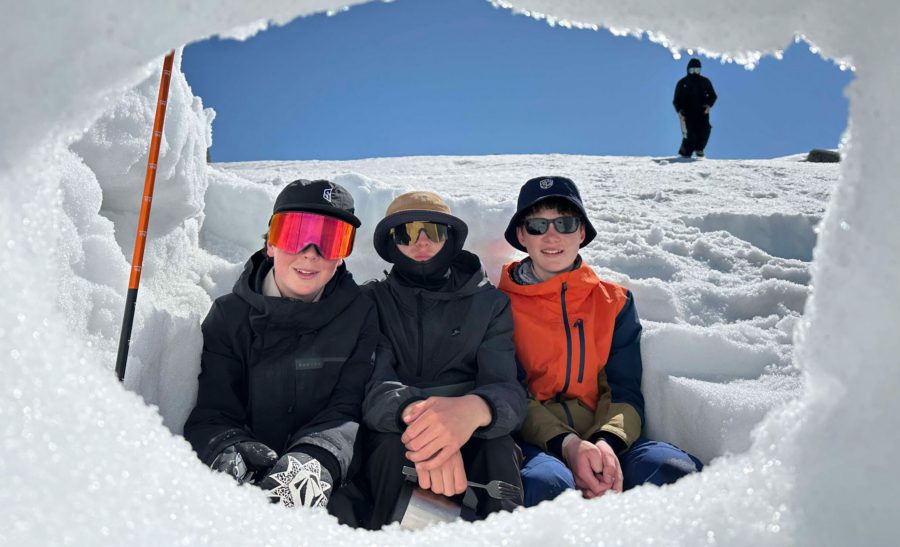
Students engage in practical learning through participation in a range of outdoor activities, such as bushwalking and navigational activities. Students develop and apply their knowledge and skills to work together to be active and safe in a variety of outdoor environments. While students will mainly walk to the lake foreshore for these practical experiences, there may be times when students explore other areas around Jindabyne and the Kosciuszko National Park.
Hands on Assessment Tasks
Stage 5 Outdoor Education students experience practical assessment tasks designed to build real world skills to be used in future outdoor settings. Practical assessment tasks include First Aid in Outdoor Environments, where students work in small teams to manage a variety of different scenarios relevant to our Snowy Mountains region, including backcountry ski injuries, mountain bike crashes, and snake bites.
Gaining Additional Qualifications
Stage 5 Outdoor Education students have the opportunity to gain additional qualifications within the course, including completing their Avalanche Skills Training Level 1 (AST1) course. By completing this course, students can gain valuable skills in risk management techniques, decision-making frameworks, and an understanding of the specific gear required for safe participation in the backcountry.in risk management techniques, decision-making frameworks, and an understanding of the specific gear required for safe participation in the backcountry.